Rising from the dramatic landscape of East Java, Mount Bromo stands as one of Indonesia’s most iconic natural landmarks. Known for its stunning sunrise views, vast sea of sand, and otherworldly volcanic scenery, Bromo continues to draw travelers seeking adventure and unforgettable landscapes. As part of the Bromo Tengger Semeru National Park, this active volcano offers a rare combination of natural beauty, cultural richness, and thrilling outdoor experiences.
Here are the highlights that make Mount Bromo an extraordinary tourist destination.
1. Sunrise at Penanjakan Viewpoint
The most famous attraction in the Bromo area is watching the sunrise from Penanjakan. Before dawn, visitors make their way to the viewpoint to witness a breathtaking sight: the sun slowly rising behind Mount Semeru—Java’s highest peak—while illuminating Mount Bromo and the surrounding Tengger caldera.
The layers of mist, glowing sky, and silhouette of volcanoes create one of Indonesia’s most iconic landscapes.
2. The Sea of Sand (Lautan Pasir)
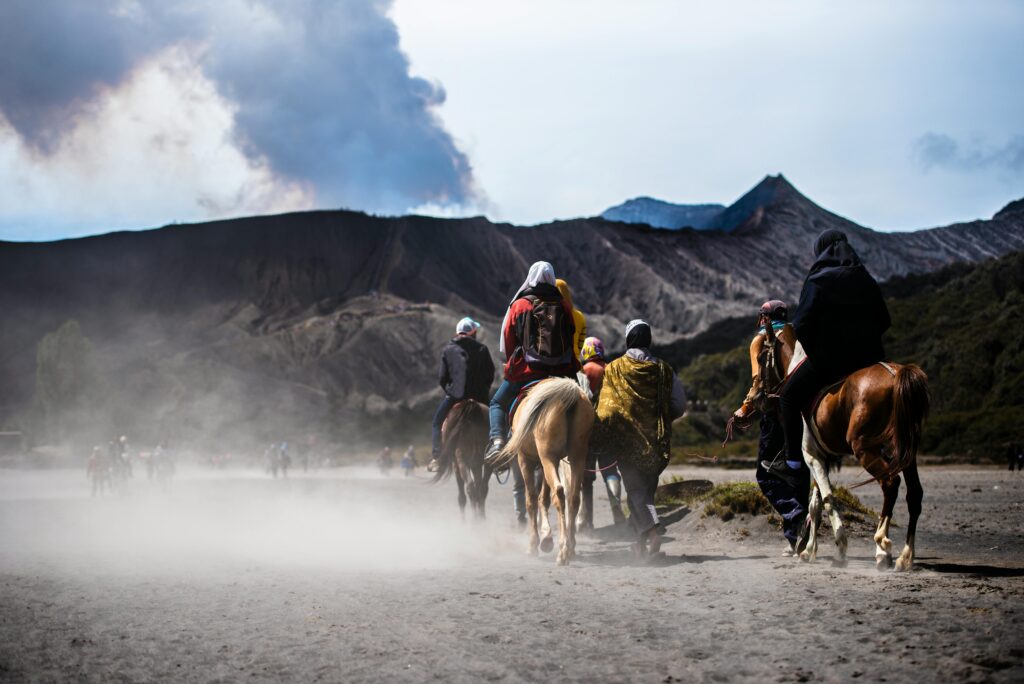
At the foot of Mount Bromo lies the wide expanse of the Sea of Sand, a desert-like terrain formed from volcanic ash. Visitors can walk, ride horses, or take a jeep across this surreal landscape. Its vast emptiness and dramatic atmosphere make it feel like stepping into another world.
3. Mount Bromo Crater
One of the most thrilling experiences is hiking up the 250 steps to the edge of Bromo’s crater. From the rim, visitors can peer into the active volcano, hearing the rumbling sounds from within and seeing smoke rising from the crater. It’s a rare and exciting opportunity to witness nature’s raw power up close.
4. Whispering Sands (Pasir Berbisik)
Named after the sound of wind sweeping across the sand, the Whispering Sands is a vast open area ideal for photography and adventure. The wind creates soft “whispering” sounds that add a mystical touch to the already dramatic scenery. It’s also a popular location for film shoots and off-road driving.
5. Teletubbies Hill (Bukit Teletubbies)
A short distance from the Sea of Sand lies the lush Teletubbies Hill, named for its resemblance to the grassy hills in the children’s show. The rolling green landscape offers a refreshing contrast to the desert-like environment surrounding Bromo. It’s a perfect spot for relaxing, taking photos, or enjoying a peaceful moment in nature.
6. Savannah Valley
Behind Teletubbies Hill stretches a beautiful savannah valley, surrounded by tall cliffs and endless greenery. During the rainy season, the area transforms into a vibrant green meadow filled with wildflowers—an unexpected but stunning sight near a volcanic region.
7. Tengger Tribe Culture
The area around Mount Bromo is home to the Tengger people, an indigenous community known for their unique traditions and Hindu heritage. One of the most famous cultural events is the Yadnya Kasada festival, where offerings are thrown into Bromo’s crater to honor their ancestors and seek blessings. Witnessing or learning about this tradition adds cultural depth to the natural experience.
8. Madakaripura Waterfall
Often visited on the way to or from Bromo, Madakaripura Waterfall is one of Java’s tallest and most enchanting waterfalls. Surrounded by towering green cliffs and narrow canyons, the waterfall creates a magical atmosphere that perfectly complements a trip to the volcanic landscapes of Bromo.
A Landscape Where Adventure Meets Mystical Beauty
With its powerful volcanic presence, breathtaking viewpoints, and rich local culture, Mount Bromo remains one of Indonesia’s most unforgettable destinations. Whether you’re chasing sunrise, exploring vast sandy plains, or learning about the traditions of the Tengger tribe, Bromo offers a blend of adventure and serenity found nowhere else.
Travel is the movement of people between relatively distant geographical locations, and can involve travel by foot, bicycle, automobile, train, boat, bus, airplane, or other means, with or without luggage, and can be one way or round trip. Travel can also include relatively short stays between successive movements.
The origin of the word “travel” is most likely lost to history. The term “travel” may originate from the Old French word travail, which means ‘work’. According to the Merriam Webster dictionary, the first known use of the word travel was in the 14th century.
It also states that the word comes from Middle English travailen, travelen (which means to torment, labor, strive, journey) and earlier from Old French travailler (which means to work strenuously, toil). In English we still occasionally use the words “travail”, which means struggle. According to Simon Winchester in his book The Best Travelers’ Tales (2004), the words “travel” and “travail” both share an even more ancient root: a Roman instrument of torture called the tripalium (in Latin it means “three stakes”, as in to impale).